
Despite legislative measures, a sprawling network of online gambling operations continues to flourish overtly across Bangladesh, a phenomenon particularly exacerbated by major global sporting events like the recent FIFA World Cup. This illicit market, which has ensnared over five million Bangladeshis, is projected to affect twenty million by 2027 if unchecked, according to a January 2026 report by the General Economics Division (GED) under the Planning Commission. The GED estimates the market's current worth at approximately BDT 830 crore ($62-68 million), experiencing an annual growth rate of 4.7-6.1 percent.
The devastating human cost of this unchecked proliferation is starkly illustrated by individuals like Khorshed Alam (name withheld), a 29-year-old businessman. With over a decade of involvement in online betting, Alam has witnessed — and personally experienced — the ruinous impact, losing his life savings, including family land and jewelry. He attests that long-term profitability is non-existent, yet the allure persists.
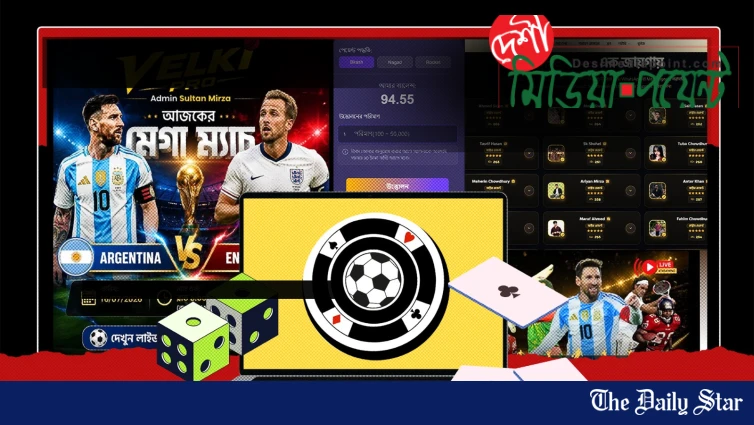
The World Cup provided a significant impetus, with betting promotions aggressively disseminated across various social media platforms. Investigations reveal numerous Facebook groups, some boasting over 100,000 followers, actively promoting wagers on matches. Many such groups were either established or rebranded specifically for the tournament, showcasing the organized nature of these rackets.
In response to this growing menace, the government enacted the Gambling Prevention Act, 2026, on June 30. This comprehensive legislation targets online gambling, betting, match-fixing, and digital wallet-based activities, prescribing severe penalties, including up to five years’ imprisonment and a BDT 1 crore fine for participation, and up to seven years’ imprisonment and a BDT 5 crore fine for promoting or advertising gambling. Despite the law's promulgation, a review by Desi Media Point found a persistent presence of betting websites and overt gambling advertisements on social media. Meta's Ad Library, for instance, documented at least 210 betting-related advertisements active on Facebook and Instagram within a week of the law taking effect.
Deputy Commissioner Mohammad Tariqul Islam of the Detective Branch’s Cyber and Special Crime (South) Division acknowledged the surge in online gambling during major events. “We are aware of such activities and regularly conduct drives, making arrests and filing cases, mostly under the new law, as these activities have largely migrated online,” he stated, indicating ongoing, albeit challenging, enforcement efforts.
The accessibility of these platforms is a critical factor in their success. Most betting sites operate through dedicated websites that list agents, allowing users to open accounts easily with just a mobile number. Desi Media Point's investigation involved placing bets on 12 different platforms, revealing a streamlined process. Deposits and withdrawals are exclusively managed through these agents via mobile financial services (MFS) like bKash, Nagad, and Rocket, often requiring a minimum deposit of just BDT 100. Winnings were processed swiftly, typically within minutes, transferred directly to MFS accounts. Comprehensive customer support is also available via Telegram and WhatsApp, underscoring a sophisticated operational infrastructure.
An agent, interviewed as part of the investigation, disclosed that the platforms are typically managed from outside Bangladesh, relying on a vast network of over 1,000 agents operating almost continuously. Agents receive commissions for recruiting new users and a percentage of each user's deposits, along with a monthly salary, and even offer additional incentives for recruitment, highlighting a highly incentivized, pyramid-like structure.
In response to these findings, Shamsuddin Haider Dalim, head of Corporate Communications at bKash, affirmed their robust compliance and monitoring systems designed to detect and prevent illegal financial activities. He stated that suspicious transactions are reported to relevant regulators, including the Bangladesh Financial Intelligence Unit. Similarly, Muhammad Zahidul Islam, head of Media and Communication at Nagad, emphasized their policy against unethical transactions, confirming that unusual activities are reported to authorities.
Dr. Din M Sumon Rahman, Dean of the School of Social Sciences at the University of Liberal Arts Bangladesh, pointed out that social media platforms often prioritize content causing direct public harm, making online betting a lower policy priority for them. He stressed the imperative for the Bangladeshi government to communicate its legal and cultural prohibitions unequivocally to these platforms. “Many governments have successfully persuaded tech companies to enforce country-specific regulations. Bangladesh can do the same, but it will require sustained institutional effort and effective negotiation,” Dr. Rahman advised, advocating for proactive governmental engagement to curb this growing menace.
The devastating human cost of this unchecked proliferation is starkly illustrated by individuals like Khorshed Alam (name withheld), a 29-year-old businessman. With over a decade of involvement in online betting, Alam has witnessed — and personally experienced — the ruinous impact, losing his life savings, including family land and jewelry. He attests that long-term profitability is non-existent, yet the allure persists.
The World Cup provided a significant impetus, with betting promotions aggressively disseminated across various social media platforms. Investigations reveal numerous Facebook groups, some boasting over 100,000 followers, actively promoting wagers on matches. Many such groups were either established or rebranded specifically for the tournament, showcasing the organized nature of these rackets.
In response to this growing menace, the government enacted the Gambling Prevention Act, 2026, on June 30. This comprehensive legislation targets online gambling, betting, match-fixing, and digital wallet-based activities, prescribing severe penalties, including up to five years’ imprisonment and a BDT 1 crore fine for participation, and up to seven years’ imprisonment and a BDT 5 crore fine for promoting or advertising gambling. Despite the law's promulgation, a review by Desi Media Point found a persistent presence of betting websites and overt gambling advertisements on social media. Meta's Ad Library, for instance, documented at least 210 betting-related advertisements active on Facebook and Instagram within a week of the law taking effect.
Deputy Commissioner Mohammad Tariqul Islam of the Detective Branch’s Cyber and Special Crime (South) Division acknowledged the surge in online gambling during major events. “We are aware of such activities and regularly conduct drives, making arrests and filing cases, mostly under the new law, as these activities have largely migrated online,” he stated, indicating ongoing, albeit challenging, enforcement efforts.
The accessibility of these platforms is a critical factor in their success. Most betting sites operate through dedicated websites that list agents, allowing users to open accounts easily with just a mobile number. Desi Media Point's investigation involved placing bets on 12 different platforms, revealing a streamlined process. Deposits and withdrawals are exclusively managed through these agents via mobile financial services (MFS) like bKash, Nagad, and Rocket, often requiring a minimum deposit of just BDT 100. Winnings were processed swiftly, typically within minutes, transferred directly to MFS accounts. Comprehensive customer support is also available via Telegram and WhatsApp, underscoring a sophisticated operational infrastructure.
An agent, interviewed as part of the investigation, disclosed that the platforms are typically managed from outside Bangladesh, relying on a vast network of over 1,000 agents operating almost continuously. Agents receive commissions for recruiting new users and a percentage of each user's deposits, along with a monthly salary, and even offer additional incentives for recruitment, highlighting a highly incentivized, pyramid-like structure.
In response to these findings, Shamsuddin Haider Dalim, head of Corporate Communications at bKash, affirmed their robust compliance and monitoring systems designed to detect and prevent illegal financial activities. He stated that suspicious transactions are reported to relevant regulators, including the Bangladesh Financial Intelligence Unit. Similarly, Muhammad Zahidul Islam, head of Media and Communication at Nagad, emphasized their policy against unethical transactions, confirming that unusual activities are reported to authorities.
Dr. Din M Sumon Rahman, Dean of the School of Social Sciences at the University of Liberal Arts Bangladesh, pointed out that social media platforms often prioritize content causing direct public harm, making online betting a lower policy priority for them. He stressed the imperative for the Bangladeshi government to communicate its legal and cultural prohibitions unequivocally to these platforms. “Many governments have successfully persuaded tech companies to enforce country-specific regulations. Bangladesh can do the same, but it will require sustained institutional effort and effective negotiation,” Dr. Rahman advised, advocating for proactive governmental engagement to curb this growing menace.